Express rehabilitations reduce the fuel poverty gap, but deeper measures are needed for vulnerable households
The VAREX 2024 study by the Institute for Research in Technology (IIT) and the Chair of Energy and Poverty at the Comillas Pontifical University has assessed the impact of express rehabilitations promoted by the Naturgy Foundation to reduce energy poverty in vulnerable households in different Spanish provinces.
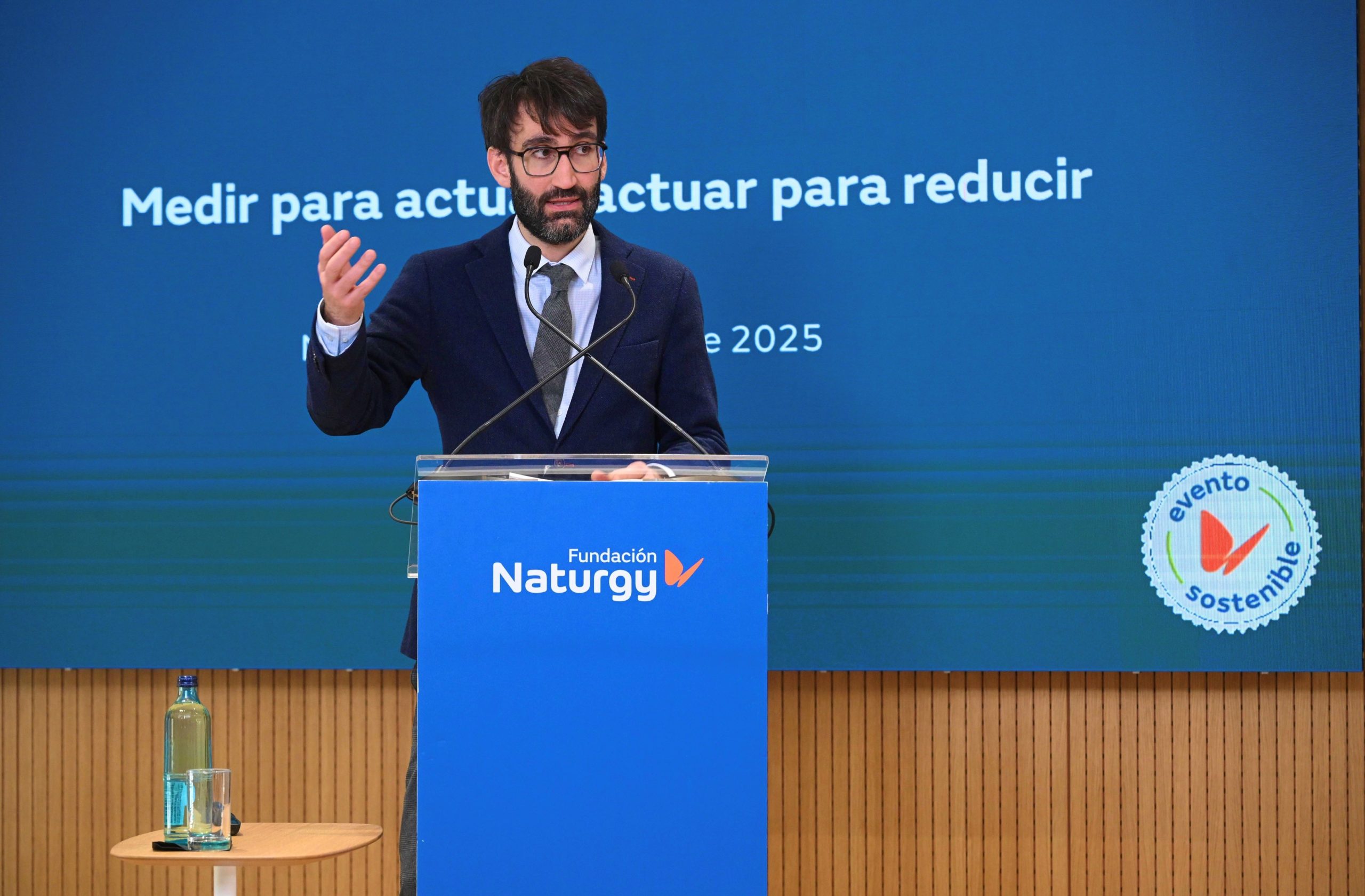
Severe hidden energy poverty is a structural challenge. More than 40% of the households analysed spent less than a quarter of what they would need to maintain adequate thermal comfort conditions, which limits the impact of express rehabilitation and micro-efficiency measures alone and requires more in-depth interventions. This is one of the conclusions of the VAREX‑2024 study by the Institute for Research in Technology (IIT) and the Chair of Energy and Poverty at the Comillas Pontifical University , which assessed the impact of around 50 express rehabilitation interventions promoted by the Naturgy Foundation’s Energy Rehabilitation Solidarity Fund.
This report has analysed the impact of express rehabilitation measures on vulnerable households in ten Spanish provinces, focusing on how the interventions affected three key aspects: the evolution of theoretical energy spending, the fuel poverty gap and the percentage of households in hidden fuel poverty.
The study therefore concludes that express rehabilitation measures generate significant energy savings of 6%, although in many cases they are insufficient to lift households out of fuel poverty. Given the severity of the cases analysed, the percentage of households in hidden fuel poverty dropped from 71.7% to 68.3% and the hidden fuel poverty gap was reduced by around €70.
The most effective measures to improve the situation of households were wall insulation and replacing windows or household appliances. In contrast, although more accessible, micro-efficiency measures (LED bulbs, draught excluders, power strips, thermocovers) showed limited impact individually, but significant when applied in combination. For example, the average financial saving per household achieved by installing draught excluders is 3.2%, while a complete kit (draught excluders, LEDs, power strips and thermocovers) achieves almost 9%.
Thermal comfort perceived by those affected improves after the interventions, especially in households where more ambitious measures were implemented, pointing to an improvement in their quality of life.
Territorial context matters, as provinces such as Ceuta and Madrid showed greater reductions in theoretical energy spending after the interventions, while in others, such as Alicante, the impact was smaller. On the other hand, the fuel poverty gap decreased most significantly in Ceuta, Tarragona and the Balearic Islands, reinforcing the conclusion that interventions need to be adapted to the climate and local conditions.
In short, the VAREX-2024 study concludes that express rehabilitation interventions generate significant energy savings and improve thermal comfort, although they are not sufficient to eradicate energy poverty in the most severe cases.
Proposed lines of action
To improve the effectiveness and scope of energy rehabilitation policies in line with the measures proposed by the new National Strategy to tackle Energy Poverty (ENPE 2026-2030), the VAREX-2024 study proposes scaling up structural interventions, prioritising higher impact measures such as wall insulation, replacement of windows and inefficient appliances; and designing public financing mechanisms that allow NGOs and local administrations to undertake these more costly reforms in vulnerable households.
It also stresses the need to strengthen the combination of micro-efficiency measures, as well as to improve monitoring and impact assessment, so that the energy poverty analysis can be extended, incorporating additional indicators of disproportionate spending and improving the analysis of inadequate temperature; and assessing other factors that affect well-being, such as damp, leaks or the state of household appliances.
Finally, the authors consider it essential to strengthen institutional collaboration, promoting partnerships between public administrations, NGOs and companies to increase the coverage and sustainability of the programmes; and expanding pilot projects for express rehabilitation proposed in the new ENPE 2026-2030.
The Naturgy Foundation Energy School
The report ‘Accompanying vulnerable families: Naturgy Foundation Energy School and energy advice points’ was also presented at the event. It includes figures such as the fact that, thanks to recommendations promoted by power company foundation’s Energy School, households accompanied have achieved average savings of 467 euros.
Almudena Laguillo, head of the Naturgy Foundation Energy School, presented the analysis, highlighting the task of accompanying vulnerable families since “education is one of the fundamental levers to alleviate energy poverty”. In fact, Laguillo praised the work of the School she manages, thanks to which “3,800 workshops and almost 44,000 training sessions have been held in 925 municipalities throughout Spain”, with which the use of the “subsidised rate has risen from 12% to 55% in accompanied households”.
This session was attended by Víctor Marcos Morell, Director General for Energy Planning and Coordination at the Ministry for Ecological Transition and Demographic Challenge (MITECO), who highlighted the importance of having measurable data in order to tackle energy poverty, a problem of great concern to the government. “Average energy spending has fallen, especially at lower income levels, with decreases of 24% and 10%”, while “the minimum wage has risen by 54%, which has increased the income of lower income households”. This reality makes it necessary to analyse the data with “rigour”, as “we do not know whether disposable income has really improved or whether it has been used to cover other basic needs”.
Regarding the process of drafting the new Energy Poverty Strategy, the Ministry’s representative assures that “we wanted to go beyond the formal and cold procedures, actually listening, in dialogue with the sectors involved and also with vulnerable people”. In fact, he stresses that “we have learned a lot; it is essential to be humble in order to get closer to citizens”.
Marcos Morell thanked the Naturgy Foundation for its work since “the idea is to count on social organisations as much as possible” and reminded them that “our door is open to you, as we are delighted to learn, listen and continue collaborating”.
‘From indicator to identification’
The day also included a round table discussion entitled ‘From indicator to identification’, moderated by Ester Sevilla, director of social and international projects at the Naturgy Foundation, with the participation of leading experts such as Efraim Centeno, director of the Chair of Energy and Poverty at the Comillas Pontifical University; Jaume Cases, Director of Transformation and Operations at Naturgy Customers; and Ángel Fernández, manager of EMSV Getafe.
During the debate, Efraim Centeno pointed out the importance of data, but also the importance of proper interpretation. “The casuistry of fuel poverty is very complicated, but by continually working on the indicators we are able to understand it. But we don’t want to stop there, we want to get in touch with all the people involved,” he said.
Jaume Cases indicated that “energy companies are the necessary intermediary between the consumer and the subsidies. Our work has been to remove barriers, in particular access to the subsidised rate for citizens who could potentially benefit and are not”. In fact, Jaume Cases recalled that “the consumer has to perceive that he or she is really receiving aid and that this can also help to implement other support”.
Meanwhile, Ángel Fernández emphasised three circumstances that condition his work: energy poverty, in which hidden poverty plays a major role, i.e. “we don’t know the specific people who are in this situation”; “stigma”, as “nobody wants to be in this situation”; and “data”, “because we need to know which people are in a situation of energy poverty and what the most appropriate measures are”.
The conference was opened by Rafael Villaseca, Chairman of the Naturgy Foundation, who said that these data are fundamental “in an area as complex as the fight against energy poverty”. Information that delivers results, as “we have assessed nearly 500 express rehabilitation and micro-efficiency interventions, and the data confirms their effectiveness in reducing fuel poverty”. Furthermore, he pointed out that “studies show the clear impact of education and, especially, of accompanying vulnerable families”.
María Eugenia Coronado, Director General of the Naturgy Foundation, was in charge of closing the event, highlighting the work carried out with this study, which “shows that rehabilitation not only helps to reduce energy costs or the energy poverty gap, but also helps families to have decent housing, greater comfort and a better quality of life”.
She also regretted that “40% of households are in hidden or severe fuel poverty, a critical issue that we must acknowledge in order to move forward”. The Director General of the Naturgy Foundation warned that “living on less than a quarter of what is necessary to have a comfortable home is a social problem we must address”.
Share