Pre-planning and effective waste management are key to protecting public health, the environment and accelerating economic recovery after flooding
The report published by the Naturgy Foundation as part of its ‘Joining Forces for Valencia’ programme proposes strategic measures to reduce risks, costs and accelerate recovery.
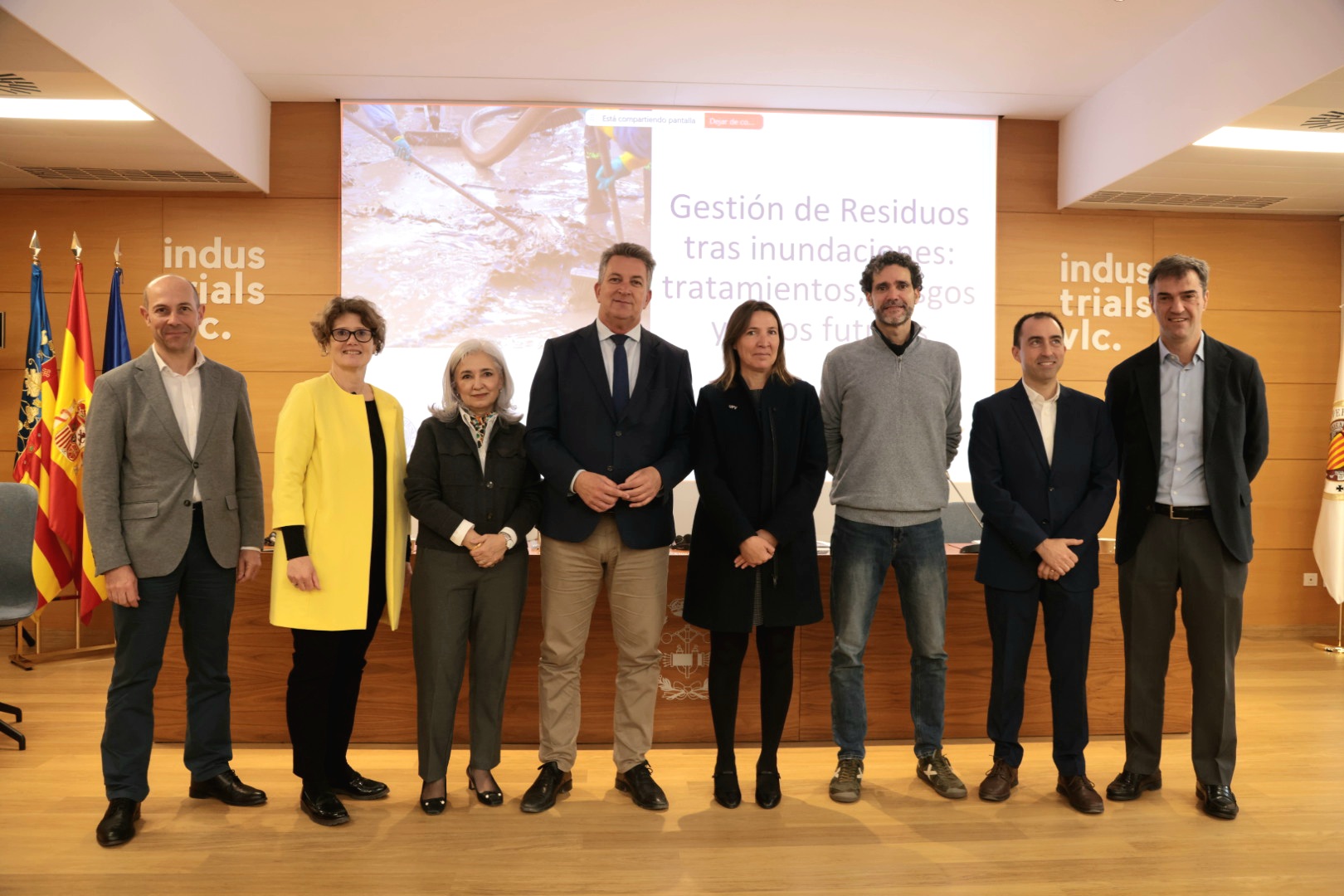
The Naturgy Foundation has presented the ‘Waste management after floods: treatments, risks and future challenges‘ report, prepared by Miguel Ángel Artacho Ramírez, professor at the Universitat Politècnica de València (UPV) and director of the Centre for Research in Project Management, Innovation and Sustainability (PRINS). The document analyses how the massive accumulation of waste following extreme events strains conventional systems and compromises public health, the environment and economic recovery.
Floods are the most frequent natural disaster affecting the most people in the world —1.7 billion people since 2000— and are expected to double in frequency in 40% of regions by 2050. After an extreme event, the volume of debris can increase five to fifteen times more than in a normal year in the affected area, something that is often underestimated and can aggravate damage if not properly managed. “Waste management is an inseparable part of the recovery process after a disaster and must be taken into consideration,” said Miguel Ángel Artacho.
The report warns about the heterogeneity of the waste generated —a mixture of debris, sludge, hazardous materials and organic debris— and its impact on critical infrastructure, roads and drainage systems, which makes immediate response difficult and increases health and environmental risks.
The Valencia flooding of 2024 alone generated up to 1.5 million tonnes of waste, similar to the waste generated during an entire year in the Valencia region. “Documenting, learning and planning is the only way to reduce impacts and accelerate recovery,” said Artacho.
The report’s key recommendations include mandatory pre-planning in vulnerable areas, including prediction of waste volume and typology. It also proposes designating secure areas for temporary storage along with protocols to facilitate reuse and recycling. The document stresses the need to include waste management experts into emergency teams and to simplify legal frameworks to speed up response. It also highlights the use of emerging technologies —artificial intelligence, the internet of things and digital twins— to ensure real-time monitoring and data-driven decision-making. Finally, the report recommends promoting public education and awareness-raising to encourage separation at source and reduce health risks.
Artacho believes that to protect lives, heritage and ecosystems, the circle of resilience must be completed: predict, prevent, respond and recover by integrating waste management as a strategic pillar. Prevention is not only hydraulic, but also organisational, technological and social.
The conference inauguration was attended by Third Vice-president and Regional Minister for the Environment, Infrastructure, Territory and Recovery, Vicente Martínez Mus, who wanted to highlight the “enormous task of rebuilding the road, metro, wastewater treatment plant and natural environment infrastructures that we completed in the summer. The biggest challenge was waste, which cost 230 million euros”. Martínez Mus also stated that “our experience has awakened the interest of other countries, who have visited us to learn from a process that we had to build with a lot of hard work, and that this study will help us to better replicate in other places”.
Vicente Martínez Mus ended his speech by stressing that “in a context marked by more than 10,000 disasters that have affected billions of people and with global warming that will double flooding by 2050, collaboration between the administration, the scientific community and the private sector, which was exemplary from the early days, is essential. This situation has served to remind us of what we need to keep in mind for the future, which is to strengthen public services, modernise management and build an environment that is prepared for climatic catastrophes”.
During the discussion moderated by Jorge Alacid, head of Coordination and Channels at Las Provincias newspaper, Miguel Ángel Artacho wanted to point out that “not seeing waste prevents the general public from understanding its real impact, but neither academia, companies nor the administration can afford to forget about it and its long-term effects must be measured”. He also warned that “it is also essential that citizens have a true perception of risk because many people are unaware that, depending on how high the water rises, they themselves or essential services in their town may be affected. So understanding the territory in which we live is essential”.
Eveline Lemke, founder of Thinking Circular®, member of the United Nations Sustainability Helpdesk and former Minister for the Economy, Climate Protection, Energy and Spatial Planning of Rhineland-Palatinate (Germany), commented during her speech that “post-disaster waste management is extremely complex and requires a better understanding of natural processes to prevent hazardous materials from contaminating soil or water”. Recalling what happened in her home country, she said that “from the beginning we knew that we needed to do better and that is why we worked with experts and specialised companies to streamline protocols. There are still scientific gaps and that is why we advocate incorporating these obligations in circular economy law and strengthening coordination between administrations, organisations and companies”. She also agreed that education in schools and universities is key to preparing young people for future disasters.
Eugenio Cámara, technical director of the Metropolitan Waste Treatment Entity (EMTRE) of the Valencia Metropolitan Area, wanted to recall that “the flooding showed that, beyond logistics, waste management also has an emotional dimension that we do not usually pay attention to, and that explains why aversion to waste remains even when the systems are recovered. The emergency forced us to act through alternative channels and rely on companies to get instructions through, especially during the first 72 hours when communication with the municipalities was almost impossible”. He also warned that “strong protocols are needed, especially communication, and much more effective environmental education, because what children learn is forgotten over the years and they become generators of waste”.
Luis Palomino, secretary general of the Association of Waste and Special Resource Management Companies (ASEGRE), also agreed with the other speakers that “waste management does not have the visibility it deserves because it disappears in the eyes of the public, but the flooding showed that it is a critical service, the magnitude of the waste generated an enormous logistical challenge that could only be addressed thanks to the Valencian system and specialised managers. The lessons learnt are already being incorporated into the new waste plan for the Valencia Region”. Beyond the local level, Palomino recalled that “we need a national plan to anticipate risks by territory and improve preparedness”.
When opening the event, Débora Domingo-Calabuig, Vice-Rector for Sustainable Development of the Universitat Politècnica de València Campus, highlighted how the Naturgy Foundation is working with university teaching staff to train unemployed people after the flooding. She also stressed that “this university puts and will put at your disposal initiatives like this, as well as all its resources, its spaces and the scientific knowledge that we generate. Universities must make the knowledge we create useful for society, also in less visible areas such as waste management, where projects such as measuring with smart containers or the future circularity application we are developing show our commitment to real environmental progress”.
The event was closed by María Eugenia Coronado, Director General of the Naturgy Foundation, who gave a brief summary of what was discussed at the session. She concluded that “the issue of waste management after the floods has taught us many lessons and highlights the need to learn and act responsibly. At the Foundation we are constantly seeking to open up spaces for reflection and debate, We are aware that climate adaptation cannot be postponed and that catastrophes will intensify in the coming years”. Mentioning the recently concluded COP 30, she highlighted one of the main conclusions that emerged: “planning, organisational structures, processes and continuous training of all people involved are essential, and projects like Joining Forces for Valencia show how waste management fits perfectly into these objectives”.
Share